Wednesday, 19 February 2014

The changing look of love

Queen’s brings hearts together, even after graduation.

For Martin Gerwin, ArtSci ’62, and his wife, Judith Rutledge, ArtSci ’62, a letter of condolence was the tool that allowed them to revive their old friendship.

“I knew Judith during my undergraduate years at Queen’s as we were both taking honours philosophy. Class sizes at that time were so small that it wasn’t hard to get to know each person quite well,” Gerwin said.

After graduating, they both ended up marrying different people and moving on with their lives, leaving Queen’s behind.

“My wife passed away later, and Judith got divorced. Judith’s sister … unintentionally brought the two of us together,” he said. “She heard about my wife passing away, and urged Judith to write a letter of condolence to me.”

The letter led to more communication, and to a reunion of the class of ’62 in August 2002, which Gerwin fondly recalls as his first date with Judith. In the spring of 2003, they were both married.

They agree that their Queen’s connection played a huge role in bringing them together, as they were both aware of each other’s personality due to the small class sizes.

As class sizes at Queen’s have expanded, online dating has replaced letters as a means of communication for romantic relationships.

For Ingrid Gagnon, ArtSci ’99, MA ’02, and her husband Edward Thomas, Sci ’06, MASc ’12, if it hadn’t been for online dating, they would probably have never met. They first met in 2007 through the online dating website eHarmony.

Gagnon didn’t know Thomas during her undergraduate years at Queen’s. Since she had pursued her undergraduate degree at the age of 24, she mostly spent time with graduate students who were her age, and was focused on her studies. Dating was the last thing on her mind.

It was after she pursued two degrees from Queen’s and was working on campus that she met Thomas. 

“eHarmony really does match you up with someone you’re compatible with to a large extent, at least in my case. After our second date, both Edward and I felt that we had a lot in common and that we didn’t want to see other people.” Gagnon and Thomas were both in their mid-30s and were looking for a meaningful relationship. At a canoeing trip in 2009, Thomas proposed to Gagnon on a cliff overlooking the sunset, and they married in later that year.

They were married at the University Club, located on campus on Stuart St.

“It seemed like the perfect place to get married because of our shared Queen’s connection,” Gagnon said.


Twenty-eight per cent of U.S. marriages began as relationships in college, according to a new Facebook study. And, the landscape of student romance is digitizing from what it once was.

For Gagnon, Queen’s has a special place in her heart as she met so many of her friends there, many of whom also chose to get married at Queen’s.

“Thinking about all of this really makes me believe that online dating worked out perfectly for us,” she said.
Gagnon and her friends aren’t the only ones with emotional attachments towards Queen’s, according to Queen’s Event Services Manager Jennifer Pete.

“Many Queen’s alumni have fond memories connected with Queen’s University which is a place where they studied for so long and met so many of their friends. As a result, many of them choose to get married on Queen’s campus,” she said.

It’s not only alumni who wish to solidify their marriages at Queen’s. Many staff and faculty, along with friends and family of alumni, choose campus as their location for tying the knot.

“For staff and faculty, it’s mostly pride in their employment at such a prestigious university … Of course, the fact that Queen’s is located amidst a gorgeous backdrop in picturesque Kingston definitely helps,” Pete said.
The most popular wedding venues on Queen’s campus include the University Club and the Donald Gordon Conference Centre near West Campus. Both hold wedding receptions throughout the year.

“For the venues that fall under the jurisdiction of Queen’s Events, the Ban Righ Dining Hall and Grant Hall are the most popular,” Pete added. “We also have a partnership with the Agnes Etherington Art Centre for wedding receptions, as well as Wallace Hall [in the JDUC], which we share with the Student Life Centre.” 

There have been quite a few creative weddings held on campus, Pete said. One in particular was a reception based on dragons and unicorns, with the bride and groom enjoying thrones as their seating.

It’s unclear, however, if the current generation shares this same passion for finding a meaningful relationship while studying at Queen’s.

The prevalence of hookup culture at most postsecondary institutions might suggest otherwise.

Shanlea Gordon, ArtSci ’11 and MA ’13, began pursuing qualitative research on hookup culture at Queen’s, which ultimately became her master’s thesis. After writing an undergraduate paper on dating violence and changes in courtship, she wanted to understand the changing dating rules and norms.

“There were dating rules and specific courtship behaviours in the early 19th century. It seems we don’t have many rules when it comes to pursuing romantic relationships anymore,” she said.

She stressed that even though most relationships on university campuses involve hookups, there’s ambiguity in literature regarding what “hookup culture” really is.

“In general, hookup culture can be defined as a heterosexual male and female engaging in drinking, meeting up at a party or a bar and engaging in sexual behaviour after. That can range from making out to sexual intercourse, to anything in between,” Gordon said.

According to her, some scholars believe that hookup culture became prevalent around the mid-1980s after the second feminist movement, but there hasn’t been much academic research done on it.

“I think it’s so prevalent because of the split gender ratio,” she said. “We have more females coming into undergraduate programs on campus as opposed to males,” she said. “If you look at it from an evolutionary perspective, some scholars would claim that because of this divide, females feel the need to engage in sexual activities in order to get the limited resource — which is the male.”

She also emphasized that even though most literature dealing with hookup culture and relationships focuses on heterosexual couples,LGBT communities also participate in hookup culture.

Hookup culture doesn’t always mean casual and meaningless relationships, said Gordon. Some of the people who indulge in hookup culture are actually hoping to find something meaningful.

“When we are talking about online dating, and Tinder in particular, there is this notion that Tinder is the new heterosexual app for hookups,” she said. “But, Tinder also gives one a chance to get to talk to another person while sober, and really get to know them.”

Tinder is a new dating app that matches users with people based on location, leaving them to select pictures of those who catch their eye. If both people “like” each other, it’s a match and they can start chatting.

Gordon noted that whatever your relationship status, we all need social interaction and intimacy. “You get more sex and better sex from a meaningful relationship rather than a casual hookup, and it ultimately boils down to how most people crave the emotional intimacy along with the physical intimacy,” she said. 

Gordon agreed that online dating and communication is something today’s generation is more comfortable with, and doesn’t discount it in any form.

“Tinder for example, really bridges the gap between meaningful relationships and hook-up culture,” she said.

The student population seems to have their own opinions about hookup culture and hot topic dating apps.

Hasina Daya, ArtSci ’14, believes that hookup culture at universities stems from people’s desire for instant gratification.

“My advice to people is to take their time and to not rush into any relationship impulsively. It’s also important to love yourself before you can love anybody else,” she said.

Efficiency is what’s driving students to search online for their significant others, according to Amal Nawal, ArtSci ’14.

“I think online dating sites are an excellent way to meet someone casually,” he said.
“People are resorting to it because it’s just so much easier.”

This article originally appeared here
Infographic by: Jonah Eisen

The little brown house on Bader lane

When Sangeeta Shakrawar arrived at Queen’s in 2010, she never anticipated that her life would change so drastically. Already apprehensive after leaving behind family and friends at home in India, Shakrawar felt lost and isolated.

Two years into her MSc, she had exhausted her money and found herself pregnant. Curiosity led her inside the brownbrick house on Bader Lane that’s home to the Ban Righ Centre (BRC). It was there that she encountered the understanding and help she needed, and it helped change her entire outlook on life.“I don’t have words to describe the kind of love, care and emotional support that I received at the BRC,” Shakrawar says.


On top of that, within 10 days she had qualified for enough bursary money to continue her studies. “Amidst the vibrant and diverse culture at the BRC, I felt like I finally belonged,” Shakrawar says. “The women there motivated and inspired me every day to strive, and to achieve my goals.”

Shakrawar, who last year earned her MSc in Mechanical and Materials Engineering, is one of the many women who have benefited from the vital services and programs offered at the BRC.

Female students coping with the special problems of being older than classmates and often starting or re-starting university studies while juggling family responsibilities, time, and money, find the support, motivation, and inspiration needed to excel in their lives. That’s why this unique campus facility is gearing up to celebrate its 40th anniversary with a special event.

Carole Morrison, the BRC’s director, says that Board members are keen to honour the women who have worked so hard to make the Centre a special place, and to celebrate those who have overcome barriers and achieved their educational goals.

“We’re excited to be marking the Centre’s 40th anniversary,” she says. “It will be a celebration of the community of women at Queen’s. We hope everyone – present and past staff and directors, current students, successful grads, and our faithful donors – will come together to celebrate and to help us ensure that the BRC is still operating 40 years from now.”

The anniversary event, built around the Centre’s annual gathering, will be held in Grant Hall on Saturday, May 3. Morrison explains that this year’s event will have a garden party theme and a new cookbook, Soups for Every Season will be sold. Morrison describes the book as a “treasured collection of seasonal soup recipes.” It also contains the unique stories of students from various backgrounds, recounting their challenging journeys.

Soup recipes hold an important symbolic value for women with ties to the BRC, where a free soup lunch is served every day while women gather to chat and enjoy the meal. “This creates a sense of kinship, support, and community,” says Morrison. “It also makes for a vibrant atmosphere when the women talk about their academic work, different cultures, and their families.”

On campus since 1870, women first won the right to take a few arts courses at Queen’s College. In 1880, four female students were accepted into the BA program. Around 1920, with about 250 women now enrolled, some alumnae (notably Charlotte Whitton, BA 1917, LLD’41), and faculty wives petitioned the Trustees for permission to raise money for a women’s residence. Ban Righ Hall welcomed its first occupants in 1925. Adelaide, Chown, and Victoria Halls followed, all four managed by the Ban Righ Board (BRB).

In the early 1970s, with the first co-ed residence on the horizon, the University merged the administration of male and female residences. What should be done with the BRB’s money? When Helen Anderson, Arts’46, envisioned the Ban Righ Centre as a place of support for women returning to school, then-University Secretary Margaret Hooey, LLD’02, and former-Registrar Jean Royce, BA’30, LLD’68, managed the transactions with meticulous care. They were just a few of the women at Queen’s who would strive to make the Ban Righ Centre vision a reality. Preserving the Gaelic name Ban Righ (“Hall of the Queen”), appropriating the one-time home of Vice-Principal W.E. McNeill (1930-47) and his wife Caroline, who was the first Dean of Women (1918-25), and appointing Helen Mathers as Director, were wise decisions that helped the BRC become an inclusive communal centre

The BRC’s “graduates” over those first 40 years have been determined to change their own world through education, and now they are generously helping others to change their worlds.

This article originally appeared here

Photo credit: Greg Black

Monday, 2 September 2013

Human Rights Office Marking 20 Years

This article originally appeared in the Queen's Alumni Review Magazine

When Irène Bujara was appointed to take charge of a Human Rights Office (HRO) at Queen’s in 1993, she never dreamed the office would grow to its current scale.

The HRO was established as a response to then –Principal David Smith’s advisory committee. Bujara stresses that without the support of the advisory boards that have supported the office, it would not be celebrating its 20th anniversary this fall.


Originally established to deal with issues related to race, the HRO now works in collaboration with the ­Equity Office to address topics of harassment and ­discrimination on the grounds of race, colour, ethnic ­origin, sexual orientation, discrimination, disability and gender identity.

The corridor walls of the HRO, located in Mackintosh-Corry Hall, are filled with colourful paintings by renowned artist, Leo Yerxa. Bujara, who directs both the HRO and the Equity Office, feels that art is a powerful medium through which human rights initiatives can be highlighted. Thus the staff has come up with the idea of celebrating the HRO’s anniversary by using art to comment on issues of social injustices.

Says Stephanie Simpson, Artsci’95, Ed’97, MEd’11, the HRO’s Associate Director, “Marking an anniversary for this kind of operation is a strange idea. Initially, we sat around a table and puzzled over how we can celebrate it. It’s not as if clients who’ve come to us would come back. It’s not going to be cakes and balloons and reunions.”
This painting by renowned artist Leo Yerxa served as the starting point for the Human Rights Office's mosaic project. All artists were invited to collaborate and create a piece of art that represents women empowerment and survival using this image as their starting point of inspiration.

In order to draw interest from the Queen’s community and to shed light on human rights issues, the HRO decided to create a mosaic by calling for various artists’ interpretations of women’s strength in the wake of ­gender based violence. All the accepted pieces will be incorporated into a large display that will be exhibited at a reception on campus on September 24. There will also be a speaker who will discuss the ways art can be used to create awareness of social issues.

Bujara says, “Even though Queen’s and the HRO have come a long way, we still face challenges, given the fact that the University’s principalship changes every five to 10 years. Any new principal takes time to get ­familiar with pertinent issues.”

Today, the HRO staff includes Catherine Wells, PhD’01, the Special Projects Coordinator, and Margot Coulter, who is the Human Rights Advisor with a focus on sexual harassment prevention. They, along with Simpson and Bujara, say they are looking forward to this fall’s anniversary celebrations and to future campus initiatives that will promote awareness and positive action on human rights issues.


Book Review: And the Mountains Echoed


Khaled Hosseini rose to fame with the phenomenal success of The Kite Runner and A Thousand Splendid Suns, which depicted the war-torn terrain of a wounded Afghanistan, and the fragile relationships between father and son, as well as mother and daughter.


Hosseini’s third book, And the Mountains Echoed, is another tearjerker filled with heartbreaking emotions, and the yearning for redemption. Set in rural Afganhistan of the 1950s, Hosseini immediately engrosses the reader through the narration of a folk tale about a farmer named Baba Ayub, whose son is kidnapped by a vicious demon. This introductory story serves as a sort of warning or foreshadowing of disastrous events to come.

The narrator of this story is a hardworking labourer, Saboor, who is later forced to give away one of his children. Abdullah and Pari are two siblings who have an inseparable bond but are torn apart as one of them is sold to a wealthy couple in Kabul. The novel then recounts the many repercussions of this separation and how it intertwines with, and affects the lives of future generations across the globe.

Unlike The Kite Runner and A Thousand Splendid Suns, which followed the lives of a few central characters, And the Mountains Echoed is narrated by a new character in each chapter. Although this new style of experimenting with different characters may seem a bit complicated, Hosseini beautifully seams each chapter together into one coherent whole.

In addition to Abdullah and Pari’s stories of love, loss, and betrayal are many sub-stories that all echo the central themes of the novel, which are loss and family betrayal. There is the story of Parwana and her twin sister, filled with deep seated pathos and jealousy; the story of the narcissistic Nila Wahdati who dares to defy traditional Afghan values and flees off to Paris; the life of a boy Adel whose father steals the land of Abdullah’s family; and the relationship of a social worker with a woman whose face has been scarred brutally by a dog bite.

The different stories intersect with each other, and depict the many strands and variations of human emotions across diverse cultures. Each story can stand on its own, but the way Hosseini connects the different dots in his poignant style, leaves one yearning for more. The introductory chapter is the most powerful start to a heartrending story, and leaves the reader racing through the pages in anticipation of how the characters will strive to achieve redemption.

The uniqueness of the novel lies in the complexity of the characters and how Hosseini brings them to life. The writer gives each character depth, and one can relate to each protagonist’s heartbreaks, failures and desire for atonement. The novel takes you on an exciting globetrotting journey as you start from Afghanistan and explore Greece, America and Paris through the eyes of a new and enigmatic persona. Even though most of the novel is centered in Europe and the United States, Afghanistan plays a central role in the hearts of all the characters. Much like his previous novels, Hosseini portrays how a person’s ties to their home country are never completely broken. Afghanistan keeps resonating in each person’s mind, is imprinted in their souls, and echoes like a nostalgic yearning.

Although the book is undeniably absorbing and captivating, Hosseini seems to be sticking to the same tedious formula that aims to tug at the heartstrings of his readers, through the tale of fractured relationships and the destruction of Afghanistan. In many ways, the book explores the same themes and relationship dynamics explored in the previous bestsellers. It’s almost as if the book is designed to be made into a movie, guaranteeing commercial success. Nevertheless, it will leave you teary eyed, and longing for more. It is definitely a compelling summer read!

This review was originally published in the The Queen's Journal

Image Sources:

Monday, 26 August 2013

Restoring the “Suzie Q” and Other Treasures

This is an article that I wrote as News Reporter for my university's Alumni Review Magazine. 

Alumnae who were on campus back in the 1950s and 1960s will remember Suzie Q. “The Golden Girl” was a regular at the games of the women’s varsity basketball and volleyball teams. She wasn’t very big- in fact, Suzie Q was less than a metre tall- but whatever she lacked in size, she more than made up for in school spirit.

However, in the late 1950s, when organizers of the Women’s intercollegiate Athletic Union outlawed team mascots- after Suzie Q was kidnapped at a women’s basketball tournament in Toronto, and an uproar ensued- the tattered, kilt wearing mascot was “retired” to a trophy case in the athletics centre. There she sat for more than 40 years. Until recently.

Staff from the Queen’s Archives work with students from the Master of Art Conservation (MAC) program to restore some valuable artefacts belonging to the university and to the City of Kingston. Their latest Queen’s projects include a restoration of Suzie Q and a football signed by players of the 1922 varsity championship football team, the year the Tricolour won the first of three consecutive Grey Cups. The deflated ball was found in a trophy cabinet at Summerhill, the campus home of the Department of Alumni Relations.

To restore and preserve the ball and Suzie Q, Margaret Bignell, ArtsSci ’75, MAC ’77, the Principal Conservator at Queen’s Archives, last fall enlisted the help of students from the MAC program, which is the only one of its kind in Canada.

Corine Soueid, MAC ’13, set to work restoring the football. She said the project took almost eight months of painstaking effort. Soueid carefully cleaned the football so the players’ signatures were legible again, and because the ball’s rubber bladder had disintegrated, she filled the space with polyester felt.  Says Soueid, “Conservation is fragile work. I had to be extra careful to ensure that the ball was restored to its original state and then I created a customized box to preserve it.”

Suzie Q received similar special treatment. The doll was in sad shape, and work on her, initiated in January, is ongoing. So far a team of students has restored Suzie Q’s clothes and has reattached her hands. Suzie Q travelled to the U of T, and that’s where she was kidnapped. When she was rescued, she had an ink tattoo on her back that reads: ‘STOLEN-Mar 2/57 TORONTO.’ The Archives staff reported that the tattoo will not be removed because it is now an important part of Suzie Q’s history. 


University Archivist Paul Banfield, MA '85 says, "The collaborative efforts of the Archives staff and the MAC students enables Archives to restore artefects, books, and city property tax assessment rolls, while the MAC students get to work on projects that let them put their theoretical knowledge to practical use. It's a win-win situation for everyone."

Image courtesy: Queen's Alumni Review Magazine


Wednesday, 7 August 2013

The Great Gatsby Movie Review: The Debauchery of 1920s America

This review originally appeared here


I’ve always been disappointed by movies based on books that I’ve read because the director usually fails to bring the literary ingenuity to justice in the film. That’s why I made sure that I didn’t read The Great Gatsby when I watched the movie so that I could witness Baz Luhrmann’s magic on screen without constantly comparing it with the book. After all, he did a pretty decent job with Moulin Rouge! and Australia.

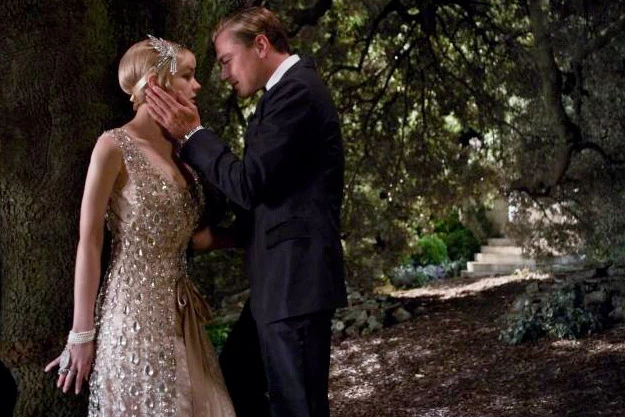
The Great Gatsby starts off with Nick Carraway (Toby Maguire), a depressed insomniac, trapped in a sanatorium, going down memory lane and recounting the days of his enigmatic youth. He keeps mentioningGatsby, and how Gatsby changed his entire outlook on life. We witness Luhrmann’s interpretation of the wild, roaring, notorious, materialistic and wealthy American life of the 1920s filled with glitz, glamour, parties, and rambunctious effervescence and grandeur.

The 3D images try to capture the essence of a thriving New York in all its extravagant splendour and exuberant vigour. 

Nick Carraway is one such Yale graduate living amidst New York’s thriving and opulent economy, and getting into the bond business. We are then introduced to Nick’s extravagantly wealthy relatives, his distant cousin Daisy (Carey Mulligan), and her supercilious husband, Tom Buchanan (Joel Edgerton). 

Luhrmann goes way overboard in trying to capture the careless, superficial and wealthy lifestyle of the Buchanan household with the camera zooming in on the billowing white curtains that leave Nick stunned, as well as the shots of a bored, and superficial Daisy lying on a gargantuan couch, dressed in white, filled with opulent rapture, and desiring to do something fantastic with her lazy life. 

We find out that Nick lives in the fictional village of West Egg, right next door to a mysteriously famous man named Gatsby (Leonardo DiCaprio) who throws extravagantly lavish parties. The movie unfolds with Nick being invited to Gatsby’s grand festival, befriending him, and then finding out that Gatsby has had an affair with Daisy in the past, and is still in love with her.


The entire movie centers around Gatsby’s tragic obsession with Daisy, his undying love for her and his objective in life, which is to marry Daisy. He wants to devote his life to Daisy’s happiness by showering her with his opulent wealth. Throughout the movie, one gets a sense of the decadence and discontent seeping into the rich American lifestyle, as the characters are dissatisfied with their spouses and having affairs on the sidelines. The pursuit of the American dream seems to be the central theme in the movie, and one can guess that this is something that is entirely an illusion as the central characters are absolutely miserable with their haughty, extravagant lifestyles filled with hollowness, loneliness and debauchery.


So after 143 minutes of enduring an over exaggerated extravaganza that resembled a complex mix of a zombie movie gone badly astray, mixed with an attempt to display a colourful 3D imitation of Alice in Wonderland , and Anna Karenina, what’s my verdict? 

Luhrmann is best suited towards producing musicals, and The GreatGatsby may have been better off as a tragic musical. 

However, I immediately read the classic novel after watching the movie and discovered that Luhrmann actually did his best to stick as close as possible to the beautifully written novella by Fitzgerald. He may have gone a tad bit too far with all the ecstatic opulence and the wild parties with Jay-Z songs blaring in the background (an attempt to modernize the audience’s vision of the American Jazz Age?), but he truly did his best and one can see that after reading the book. 

Although the movie was a bit too long, Luhrmann’s attempt to use 3D images to capture the despondent lifestyle of amoral 1920s America was an interesting way of bringing the novella to life. Moreover, his extravagant display of the luxurious, wild, and excessive splendour of Gatsby’s parties was his way of depicting how hollow the pursuit of wealth actually is, and somehow, the disillusionment of the characters became more and more obvious through the riotous, ritzy and exuberant wasteland known as 1920s New York.

Leonardo DiCaprio is absolutely charismatic as the “Great Gatsby,” filled with an obsessive passion for the girl he loves. He brings the character of Gatsby to life beautifully, but we have already seen DiCaprio play the tragic lover boy who would easily die for the girl he lives in Titanic and Rome+Juliet, so his performance was nothing new. Carey Mulligan is appropriate as the selfish Daisy, and Elizabeth Debicki is passable as Jordan Baker (a friend of Daisy’s). Tobey Maguire barely has any role to play and is merely relegated to the role of acting as the mouthpiece of the movie, reading out Fitzgerald’s prose in an attempt to give the movie the same sort of melancholic splendour as the novella. 

The cameo appearance of Amitabh Bachchan (Meyer Wolfsheim) as a scrupulous bootlegger is absolutely horrible. Overall, Luhrmann should have left Fitzgerald’s masterpiece alone, and perhaps made a movie out of Oscar Wilde’s The Picture of Dorian Gray.

Image sources:
http://wac.450f.edgecastcdn.net/80450F/screencrush.com/files/2012/05/gatsby-trailer.jpg
http://fictoflick.com/wp-content/uploads/2013/04/GatsbyF-e1366254583695.jpg
http://abovethebuzz.com/wp-content/uploads/2013/03/The-Great-Gatsby.png

Monday, 29 July 2013

The Fox News Fiasco

Printed here originally

Fox News has always been criticized for sensationalism, drama, and for coming up with the most bizarre conspiracy theories. But the latest scandal has resulted in numerous published articles condemning Fox News for spreading anti-Muslim propaganda.

Last Friday, Reza Aslan, a renowned scholar of religion who has a PhD in the sociology of religions was invited on FoxNews.com’s show Spirited Debate to talk about his new book, Zealot: The Life and Times of Jesus of Nazareth.

However, instead of asking intelligent questions about the argument of the book, or some of the scholarly discussion or sources used by the author, Lauren Green, the host of the show, went on to drill Aslan with the most ridiculous questions, which clearly insinuated that the host had some islamophobic sentiments.

For those of you who haven’t watched the video, go ahead and watch it below:


One immediately got the sense that the interviewer is up to no good when the first question she asked was: "You're a Muslim, so why did you write a book about the founder of Christianity?"

Most renowned scholars who are invited for interviews usually do not have to defend their credibility by listing the number of degrees that they have but Aslan, who seemed taken aback by Green’s question, was forced to say that he has four degrees, is an expert on the New Testament and is fluent in biblical Greek and has been studying Christianity for two decades.

For most people, this answer should have been enough to stop the ridiculous probing into Aslan’s background and faith but Green didn’t think so. She went on to drill Aslan, expressing incredulity at how he could possibly be interested in Christianity and in Jesus.

Aslan then went on to explain how academia works as if he was talking to a two year old child. He went on to tell Green that he has nothing against Christianity and that he is not against the religion he loves to write about. He said that the book in fact provides many arguments which conflict with Islamic beliefs about Jesus.

Green was unconvinced and went on to say that she had interviewed many religious scholars who have written books on Jesus and the resurrection, and that Aslan claiming that his information is different from the one presented by these renowned scholars is wrong.

Green’s comments displayed an utter lack of ignorance about how the world of academia works. The whole point of being in academia is to constantly question and critically analyze the information that is available, to probe the historical documents over and over again as well as to constantly have scholarly debate with other scholars in the field. Looking at particular historical incidents or figures and re-analyzing them, and then making an argument that is unique, that is “different” and that produces new evidence or a new viewpoint is exactly what produces a successful scholar.

Moreover, it’s not like Aslan was making up stuff about Jesus and Christianity in his book without supporting documentation. He claimed that his endnotes contained all the information that is needed for an academic to back up his argument, explaining that he consulted 1000 books in his discussion and that he has 100 notes at the end of the book.

Green still seemed unable to come to terms with the fact that a Muslim could somehow be interested in Jesus or Christianity even though Aslan cited his credentials as an expert religious scholar over and over again and even went on to say that he could not fathom why his faith had anything to do with him writing this book. Exasperated, Aslan said, “I am a historian, I am a PhD in the history of religions! This isn't a Muslim opinion. This is an academic work of history, not about the Christ or Christianity for that matter. It’s about a historical man who walked the earth two thousand years ago in the land of the Romans called Palestine.”

What’s wrong with being passionate about studying a certain subject? Does this mean that all Jewish and Christian scholars ought to stop writing about Islam because they have no right to do so? Does this mean that renowned scholars such as Karen Armstrong ought to stop publishing books that have anything to do with Islam?

Green’s most ridiculous assertion was that Aslan never mentioned in previous interviews that he was a Muslim. First of all, what does one’s faith have anything to do with one’s professional career? A Christian writing about Jesus would probably have a more biased opinion than someone from another religion writing about Jesus. And it was evident that Green had no idea what Aslan’s book was about since she had no clue that his faith was mentioned in the second page of the book, and he was not trying to hide the fact that he is a Muslim.

Not surprisingly, the interview caused immediate sparks on social media and blogging sites and Buzzfeed asked, "Is This The Most Embarrassing Interview Fox News Has Ever Done?"


The Twitter hashtag #foxnewslitcrit was born, where people mocked the utter lunacy of Green’s questions. Some of the popular tweets were the following:


All I would like to say to Ms. Greene is that since she is not an academic historian, nor a religious scholar, she has absolutely no right to have a discussion about a historical or religious figure or to interview someone who is an academic scholar. The fact that the interviewer forced the academic scholar to continuously defend himself against unjust allegations about having some kind of agenda against Christianity and forced him to continuously cite his credentials and defend his legitimacy as a scholar was disgraceful. However, this interview actually proved to be good for Aslan’s book as people are now dying to read it more than ever. If there is one thing Fox News is good at, it is at making something immensely popular. Thank you Fox News for promoting this book in such a demented fashion. I can’t wait to order it!